Could you please introduce yourself?
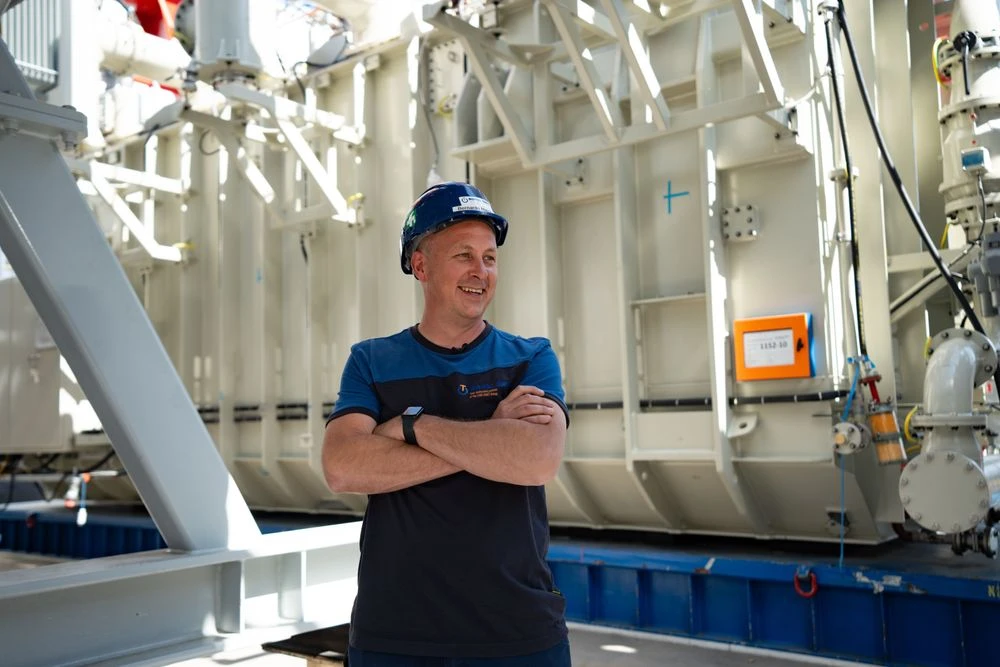
Tim Daamen, All-Around Lead Mechanic / Mentor in the Interior Assembly Department
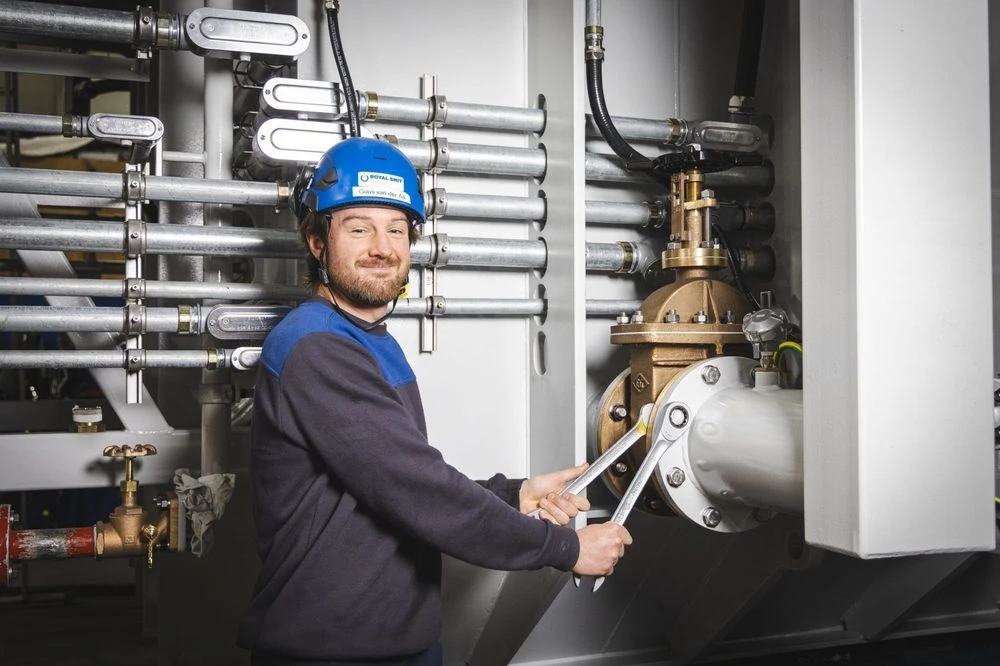
My name is Tim Daamen, and I started working as a mechanic in the Sheet Metal Processing department in 2005. I joined the company as a temporary worker at the time. In 2006, I had to leave temporarily due to a reorganization, but a few months later I was asked to come back. I’ve been here ever since. I’m a trained electrician, and before I started at SMIT, I worked in the residential construction industry.
What do you do in your job?
In my role, I spend a lot of time on the production floor. There, I guide people in their work. I help new employees get their bearings in the department, provide explanations, and serve as a sort of go-to person. When production allows, I also provide training to help employees improve their skills. For example, I train them on a specific topic, such as “switches.” I make sure the workflow stays smooth on the production line. I also pitch in with the guys when the opportunity arises.
What do you like best about your job?
What I enjoy most about my work is the variety. No two transformers are the same. They’re complex to build. You need specialized knowledge that you can’t gain anywhere else. For example, when you’re assembling the internal components, you have to develop a feel for the voltage clearances. You need to know when to double-check details on a technical drawing and identify the critical points on a drawing. We also work on the internal components of a transformer—the electrical parts.
In my role, I also need to be good with people. I need to motivate them, sometimes encourage them to take action, or teach them new things. I do this by interacting with them. I don’t just want to tell them how to do something; I also want to let them do it themselves.
Another thing that makes working at SMIT so enjoyable is the courses and training programs I’ve been able to take. That’s how I got to where I am today. I’ve had the opportunity to take both external training programs and internal courses. I’d like to invest a lot of energy in people, as long as that energy comes back to me. I always say, “Energy in, energy out.”
Finally, I like that you keep learning on the job here. We do everything together here—no one can do it alone. When a coworker asks for your help and you offer it, you end up learning new things in the process. That could be something new in the field of technology, or about the composition of insulation material. For example, we sometimes use insulation made from old jeans—did you know that?
What do you need to be able to perform your job effectively?
What you need, aside from specific knowledge, is, first and foremost, honesty. Suppose you drop a small bolt into the internal components and don’t say anything about it. Then people work on those components, and afterward, the unit goes into the tank. The tank is filled with oil. After that, the transformer is further assembled and tested in the HSL. Then it turns out that the test doesn’t go well, and everything has to be taken apart again. That results in a huge financial loss. So we really want people to be honest and tell us if they’ve dropped something inside the unit, so we can fix it in time. Building a transformer is a very complex process; everyone has different skills that no single person can possess all at once. That’s why we need each other and truly work together within SMIT. Collaboration is therefore also very important—you have to be able to do that. With us, you work in a team, not just in a group. There’s a difference there. And of course, someone has to be technically skilled and precise. But above all, someone needs to have the right mindset. Then you’ll get there.
Why do you enjoy working at Royal SMIT, and what makes SMIT a unique employer?
There’s a lot of variety in your work here. We do everything together, and there’s a strong sense of camaraderie—not just within the department but also across departments. You’re given the space and opportunity to learn everything here. You can grow step by step. Of course, the employment conditions are also very good. But the most important thing is the supportive colleagues and the trust placed in you. People work hand in hand here. As an all-around lead technician, you’re also involved in everything. But there are also plenty of opportunities for career advancement here. For example, I started out in sheet metal processing, then moved to cabinet making (now the Pre-assembly department), and then back to sheet metal processing. But I was also occasionally assigned to Final Assembly, Coil Construction, or the Winding Department. That allows you to see the entire process, which is also very educational.
Can you tell us a little about your team? How are people trained at Royal SMIT?
We have a very diverse group of people on our teams, from all kinds of cultures. As a result, each individual brings something unique to the table. But everything runs very smoothly within our team. That allows me to focus on other things sometimes—for example, taking on a project with Engineering, reviewing QCPs (Quality Check Points), and so on.
Training at SMIT is truly “on the job.” Of course, you need a basic interest in technology, and it’s a definite plus if you have a technical background. But the training happens while you’re working. We realize that you’ll make mistakes, and that’s okay. We often learn from mistakes by incorporating them into our training sessions. That way, we can all learn from them!
Are you curious about what you can do for SMIT? Then take a look at our vacancies page.